
NVIDIA Microduck Robots Unveiled at GTC Berlin: The Future of AI Robotics
NVIDIA CEO Jensen Huang showcased the AI-powered Microduck robots at GTC Berlin. Discover how these open-source, 10-inch robots are revolutionizing AI training.

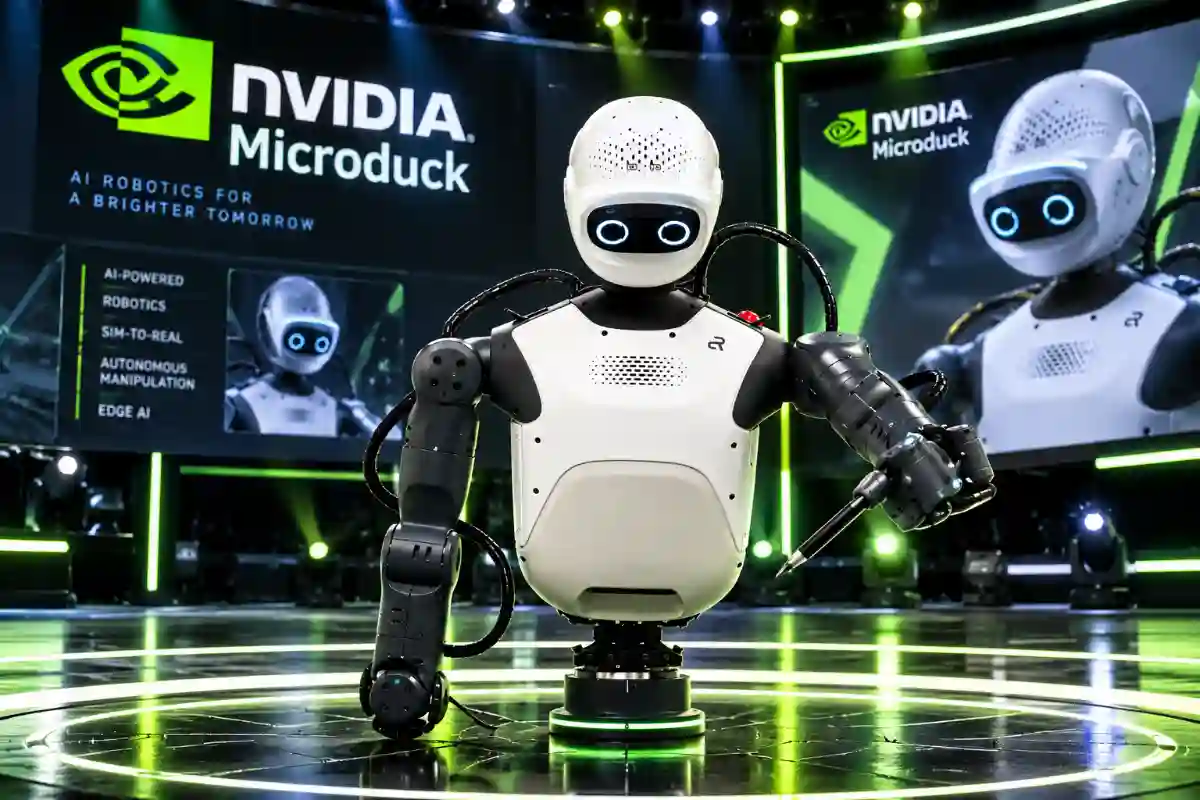
The intersection of artificial intelligence and physical robotics has just witnessed a delightful and groundbreaking leap forward. At the recently concluded GTC Berlin technology event, NVIDIA CEO Jensen Huang captivated the audience not just with advanced silicon architectures, but with a surprising and interactive demonstration. Joining him on the main stage were the "Microducks"—a squad of highly advanced, diminutive robots that showcased the incredible potential of AI-driven physical automation. These small machines waddled onto the stage autonomously, instantly becoming the center of attention and a massive talking point across the internet.
While they may look incredibly cute, the Microducks represent a serious technological achievement. They are the result of a powerful collaboration between the prominent AI platform Hugging Face and the French robotics firm Pollen Robotics. By combining cutting-edge machine learning algorithms with precise mechanical engineering, these robots demonstrate how quickly AI models can learn complex physical behaviors. During the presentation, the robots flawlessly executed verbal commands from Huang, ranging from sitting down to standing up, and even simulating "going to sleep" by laying down on the stage.
This charming demonstration was not just for show; it served as a live masterclass in NVIDIA's comprehensive robotics ecosystem. The Microducks are designed to be an open-source platform, specifically targeting students, researchers, and developers who are eager to push the boundaries of what autonomous machines can do. By making this technology accessible, NVIDIA and its partners are actively democratizing the field of robotics, ensuring that the next generation of engineers has the tools they need to build the intelligent machines of tomorrow.
Key Highlights: The NVIDIA Microduck
- Unveiled At: GTC Berlin by NVIDIA CEO Jensen Huang.
- Creators: A joint development by Hugging Face and Pollen Robotics.
- Physical Specs: Stands roughly 10 inches tall and weighs less than 2 pounds (~900 grams).
- Core Purpose: An open-source robotics platform for students and developers.
- Software Ecosystem: Trained using NVIDIA Isaac Lab, Isaac Sim, and Newton's physics engine.
The Stage Demonstration: AI in Motion
The keynote at GTC Berlin will be remembered for the seamless interaction between human and machine. When Jensen Huang commanded the four Microducks to sit, they responded with immediate precision. The true highlight of the demonstration occurred when Huang announced it was "time to sleep." Three of the robots promptly lay down on the stage. The fourth, displaying an almost endearing level of autonomous character, took a few extra steps across the stage before finally joining its companions in a resting position. This drew laughter from the crowd and from Huang himself, who then cheerfully commanded them to stand back up.
This level of fluid, responsive motion in a robot weighing less than 900 grams and standing merely 10 inches tall is a testament to the miniaturization of robotic actuators and the efficiency of modern AI processing. The robots are not pre-programmed with rigid, traditional code for these movements. Instead, they rely on advanced AI models that process commands and translate them into complex, coordinated physical actions in real-time, adapting to their environment seamlessly.
The Technology Powering the Microduck
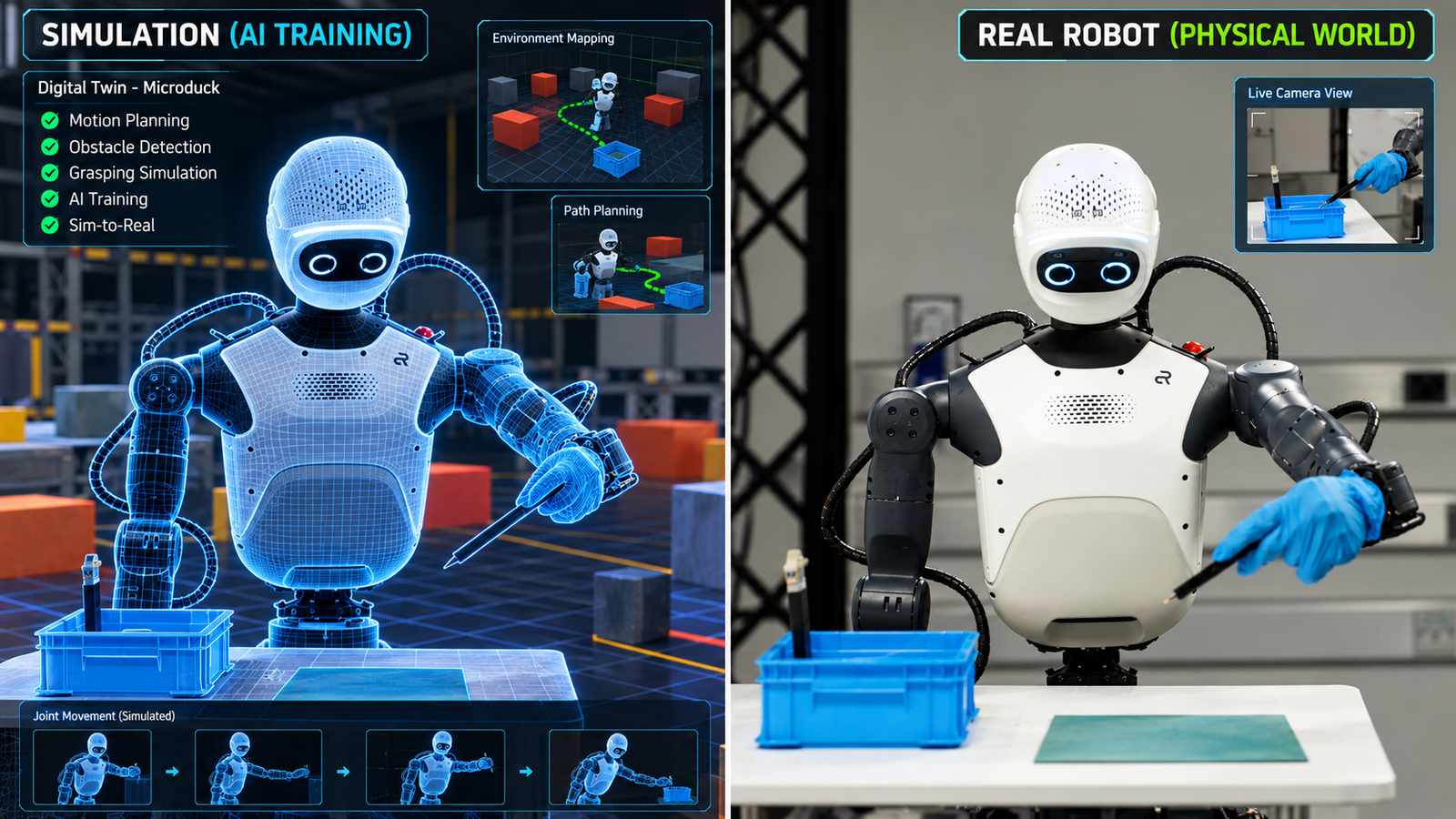
Behind the charming exterior of the Microduck lies a remarkably sophisticated technological foundation. These robots serve as a physical showcase for NVIDIA's overarching vision for the future of AI. Before the robots ever took their first physical steps, they were rigorously trained in a purely digital environment. Jensen Huang presented a video detailing this process, explaining how an AI agent was responsible for teaching the Microduck how to move.
The training regimen heavily utilized NVIDIA's Isaac Lab and the Isaac Sim tool. Developers created a comprehensive training course within a simulated digital twin of the real world. By leveraging Newton's physics engine within this virtual space, the AI agent could simulate gravity, friction, and momentum, allowing the digital version of the robot to learn through trial and error—a process known as reinforcement learning—at speeds vastly exceeding real-time.
From Simulation to Reality: The RTX Spark Connection
The transition from a digital simulation to a physical robot is historically one of the most challenging aspects of robotics, often referred to as the "sim-to-real gap." NVIDIA elegantly bridges this gap using its immense computational infrastructure. The heavy lifting of the AI training was conducted on NVIDIA's powerful cloud-based supercomputers. Once the digital model achieved proficiency, the results were transferred and verified locally using an RTX Spark laptop. This workflow demonstrates how developers can use powerful cloud infrastructure for heavy training and edge devices (like the RTX Spark systems) for real-world deployment and fine-tuning.
Why Open-Source Matters for the Future of Robotics
Perhaps the most significant aspect of the Microduck project is its open-source nature. By designing this platform specifically for students, researchers, and independent developers, Hugging Face, Pollen Robotics, and NVIDIA are removing massive barriers to entry in the robotics field. Historically, accessing capable robotic hardware and the software required to train them has been prohibitively expensive and locked behind proprietary corporate walls.
The Microduck changes this paradigm. Developers are actively encouraged to teach the machine new physical skills, modify its underlying code, and share their innovations with the broader global community. This collaborative approach is expected to rapidly accelerate the development of physical AI. When thousands of minds can experiment with the same standardized, capable hardware using industry-leading simulation tools like Isaac Sim, the pace of innovation scales exponentially.
Features and Capabilities Overview
Advantages & Innovations
- Open-Source Platform: Encourages community-driven innovation and shared learning.
- Advanced Sim-to-Real Pipeline: Seamless integration with NVIDIA Isaac Sim for rapid virtual training.
- Compact and Accessible: At under 2 pounds, it is safe, portable, and ideal for classroom or lab environments.
- Backed by Industry Leaders: Leverages the combined expertise of NVIDIA, Hugging Face, and Pollen Robotics.
Current Limitations to Consider
- Development Focus: Primarily intended for developers and researchers, not immediately available as a consumer toy.
- Hardware Dependency: Optimal training requires access to capable hardware, such as NVIDIA's cloud infrastructure or RTX-equipped systems.
- Payload Capacity: Due to its small size, it is designed for movement and AI testing rather than heavy physical labor or carrying loads.
Conclusion
The introduction of the Microduck at GTC Berlin is far more than just a captivating tech demo; it is a clear indicator of where the robotics industry is heading. By blending powerful cloud-based AI training, sophisticated digital twin simulations, and accessible open-source hardware, NVIDIA and its partners are paving the way for a new era of intelligent machines. The Microduck proves that the future of robotics is not just about massive, industrial machines, but also about agile, highly intelligent, and community-driven platforms that will educate the next generation of innovators.
For students, developers, and educational institutions interested in exploring the capabilities of the Microduck platform, it is highly recommended to familiarize yourself with the NVIDIA Isaac ecosystem and Hugging Face's open-source repositories. Staying updated through official channels will provide the best information regarding hardware availability and software updates for this emerging robotics platform.
Frequently Asked Questions
Quick answers to common questions about this article
Q1: What exactly is the Microduck robot unveiled by NVIDIA?
Q2: How was the Microduck robot trained to perform physical actions?
Q3: Is the Microduck robot available for regular consumers to buy as a toy?
Q4: What role does Hugging Face play in the Microduck project?
Q5: Why is the open-source aspect of this robot so important for the tech industry?
Salik Kumar
Founder & Lead Tech Analyst. Dedicated author focusing on high-quality, well-researched, and policy-compliant digital content.
Discussion (0)
No comments yet. Be the first to share your perspective on this topic.
Join the Conversation